Rooted in Place: How Hyperlocal Storytelling Transforms Atlanta Scripts into National Commodities
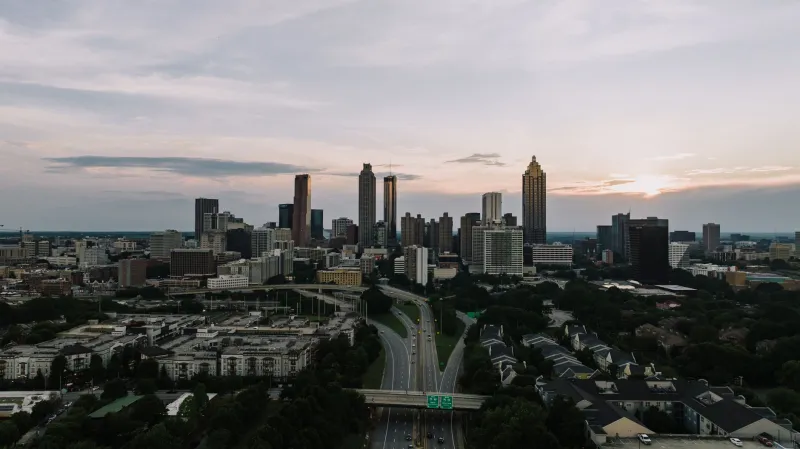
There is a persistent anxiety among screenwriters working in Atlanta—a quiet, nagging fear that setting a story too firmly within the city's distinct geography, class structures, and cultural institutions will somehow shrink its appeal. The logic sounds reasonable on the surface: national audiences do not know the difference between Cascade Heights and Buckhead, do not feel the weight of a character who grew up in the shadow of Stone Mountain, and will not recognize the particular social choreography of a cookout in Southwest Atlanta.
That logic is wrong. And the writers who have abandoned it are finding doors opening that broad, locationless scripts could never unlock.
The Homogenization Problem in Streaming Content
Over the past decade, the rapid expansion of streaming platforms created an enormous appetite for original content. What followed, however, was a flood of productions that could have been set almost anywhere—generic suburban homes, unnamed cities, interchangeable office buildings. The result is a library of content that is technically competent but emotionally forgettable.
Development executives and independent producers are increasingly vocal about what they are looking for in response: stories that feel like they could not have come from anywhere else. Authenticity of place has become a genuine market signal, not merely an artistic virtue. When a script carries the unmistakable texture of a real community—its specific tensions, its landmarks, its vernacular—it communicates something that a polished but generic premise cannot: this story was written by someone who knows something.
For Atlanta screenwriters, that shift represents a structural advantage. You are already here. The raw material is outside your window.
Geography as Character
Atlanta's physical landscape is not a backdrop. It is an active force in the lives of the people who navigate it. The city's notorious traffic patterns do not simply delay characters—they create pressure, enforce class proximity, and manufacture the kind of accidental encounter that plot depends on. The BeltLine has become a social corridor where Atlanta's economic contradictions play out in plain sight. The distinction between in-town neighborhoods and the outer suburbs carries cultural meaning that resonates far beyond city limits, because every American city has its own version of that divide.
Screenwriters who treat Atlanta's geography as a generic placeholder are leaving dramatic material on the table. Writers who map their characters' movements against the city's real topography discover that the city itself begins to generate story. A character who cannot afford to live close to work is not just inconvenienced—she is caught inside a systemic pressure that audiences across the country will recognize and feel, even if they have never set foot in Georgia.
The specificity is the universality. That is the central craft insight that separates regional writing that travels from regional writing that does not.
Dialect, Cadence, and the Sound of Authenticity
Southern dialogue remains one of the most mishandled elements in American screenwriting. When writers who are not from here attempt it, the results tend toward caricature—a collection of stock phrases that signal "Southern" without capturing the actual rhythms of how people in Atlanta talk. Those rhythms are considerably more varied and nuanced than outside representations suggest.
Atlanta's speech patterns reflect the city's history as a migration destination, a commercial hub, and a cultural capital for Black America. The cadences in a Westview living room differ from those in a Dunwoody conference room, which differ again from those on Auburn Avenue. Writers who have absorbed these distinctions through lived experience possess something that cannot be researched in a weekend—a feel for when a line of dialogue rings true and when it announces itself as performance.
That ear is a professional asset. Producers who are developing Atlanta-set projects need writers who can deliver authentic dialogue without requiring extensive dialect coaching or rewrites. Positioning yourself as a writer with that specific competency is a legitimate career strategy, not a regional limitation.
Cultural Institutions and the Specificity of Social Life
Every city has institutions that organize its social and cultural life in ways that outsiders rarely understand. Atlanta's are particularly rich with dramatic potential. The city's HBCU community shapes professional networks, romantic relationships, and class aspiration in ways that have been underrepresented on screen despite their enormous narrative possibilities. The role of the Black church in Atlanta's civic life is not a historical artifact—it is a present-tense force that influences politics, business, and family structure in ways that provide natural dramatic architecture.
The city's entertainment industry ecosystem itself—the music production community, the independent film infrastructure, the overlap between Atlanta's tech sector and its creative class—represents a milieu that has barely been explored in scripted content. These are not niche subjects. They are windows into experiences that millions of viewers across the country are curious about and underserved by existing content.
Screenwriters who are embedded in these communities and can render them with accuracy and complexity are not writing for a limited audience. They are writing for anyone who has ever felt that the world they actually live in does not appear on screen.
Making the Case to Producers
Understanding the craft argument for regional specificity is one thing. Communicating it effectively in a pitch or a written query is another. Atlanta-based writers who lead with their local knowledge as a selling point—rather than apologizing for it or burying it—tend to reframe the conversation in productive ways.
The pitch is not "this is a story set in Atlanta." The pitch is "this is a story that could only come from Atlanta, and here is why that matters for the audience you are trying to reach." That framing invites a producer to consider the competitive positioning of the project, not simply its logistical location.
It is also worth noting that Georgia's production infrastructure makes Atlanta-set stories logistically attractive. A script that is authentically rooted in the city carries an implicit argument for local production—which, given the state's tax incentive structure, is an argument that has real financial weight in development conversations.
The Long View on Regional Identity
The writers who have built durable careers out of Atlanta—who have moved from locally produced work to national recognition—share a consistent characteristic. They did not dilute their regional perspective in pursuit of broader appeal. They refined it. They learned to render the specific with enough precision and humanity that it became legible and resonant to audiences who had never shared those particular experiences.
That is, ultimately, what all great screenwriting does. It takes the particular and makes it universal—not by removing the particulars, but by going deeper into them.
Atlanta is not a limitation on your voice as a screenwriter. It is the foundation of it. The writers who understand that are not waiting to be discovered. They are already building careers on the only advantage that cannot be replicated: knowing exactly where they come from and having the craft to put it on the page.