Circuit Wisdom: A Screenwriter's Strategic Guide to Atlanta's Festival Ecosystem
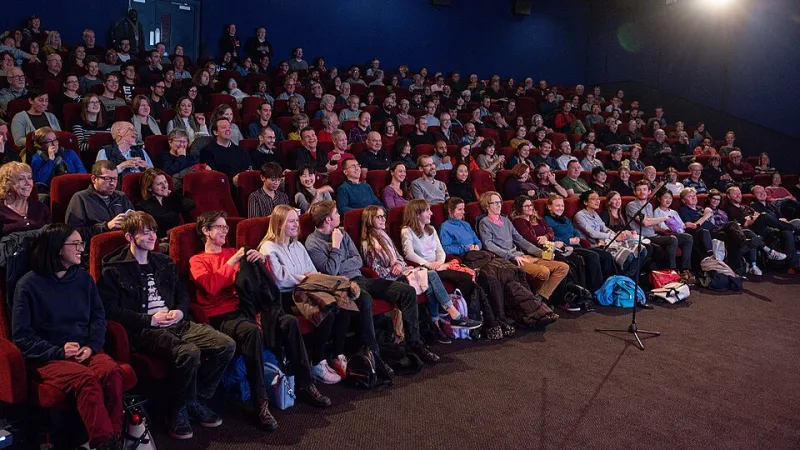
Photo: Kitsonian, CC BY-SA 4.0, via Wikimedia Commons
The festival circuit is frequently described to emerging screenwriters in terms that suggest a simple meritocracy: submit your best work, collect your laurels, and watch the industry take notice. The reality, as most working writers in Atlanta eventually discover, is considerably more complicated. The festival ecosystem in this region operates according to a distinct set of priorities, relationships, and informal hierarchies that have very little to do with submission guidelines and very much to do with context, strategy, and community knowledge.
Navigating that ecosystem effectively is a learnable skill. But it requires honest information about how the circuit actually functions—information that is rarely presented directly to the writers who need it most.
Understanding What "Currency" Actually Means
Before discussing specific festivals, it is worth establishing what it means for a festival to carry genuine currency in the Atlanta market. The measure is not prestige in the abstract sense, nor is it submission volume or social media visibility. Currency, in practical terms, means two things: the attention of local producers and production companies who regularly scout festival programs for material, and the attention of national distributors and platform executives who track regional festivals as part of their acquisition pipeline.
Not every festival that appears on a submission platform delivers either of these things. Many regional festivals provide legitimate community celebration of local filmmaking without generating the kind of industry attention that moves screenwriting careers forward. That is not a criticism—it is simply an accurate description of what those festivals are designed to do. Writers who understand the distinction can make better decisions about where their submission budgets and energy are best directed.
The Atlanta Film Festival: The Anchor of the Regional Circuit
For most purposes, the Atlanta Film Festival occupies the central position in the regional ecosystem. Its screenplay competition has developed a reputation—earned over years of consistent programming—for attracting serious industry attention in ways that few comparable regional competitions do. Productions companies based in Atlanta follow the competition results. Development executives visiting the city for the festival itself occasionally use the competition shortlists as a starting point for conversations with local writers.
For writers at a stage where they have polished, market-ready material, the Atlanta Film Festival screenplay competition represents the highest-priority submission on the regional calendar. The investment of time in preparing a submission—which means not simply uploading a draft but genuinely calibrating the work to the competition's demonstrated preferences—is justified by the potential return.
Festival programmers at events of this scale are consistent about one thing when asked what separates noticed submissions from overlooked ones: specificity. Scripts that demonstrate genuine knowledge of their settings, characters who feel inhabited rather than constructed, and narrative problems that arise from authentic dramatic logic rather than genre convention are the ones that generate internal discussion.
Smaller Festivals as Strategic Laboratories
The regional circuit also includes a number of smaller festivals—some Atlanta-based, others distributed across the Southeast—that serve a different strategic function. For writers who are developing their work rather than premiering finished material, these festivals can provide something the major competitions cannot: iterative feedback from programmers and judges who are close enough to the regional market to offer genuinely useful perspective.
Georgia's festival calendar includes several events specifically oriented toward Southern storytelling and regional narratives. These competitions tend to attract programmers who are deeply fluent in the cultural context that Atlanta writers are working within, and their feedback—when it is made available to submitters—can be more immediately actionable than the generic notes that emerge from larger competitions.
The strategic calculus here involves career stage. A writer with a first or second feature draft has more to gain from the feedback infrastructure of a smaller, focused festival than from a high-profile competition where the primary output is a placement rather than a conversation.
The Networking Architecture of the Festival Calendar
For screenwriters specifically, the most underutilized dimension of the festival circuit is its networking architecture. Festivals create concentrated windows of access to industry professionals who are, in that context, specifically oriented toward discovery and conversation. The challenge is that most screenwriters approach festival networking reactively—attending panels, waiting to be approached, hoping that placement notices will generate inbound interest.
The writers who extract the most value from the circuit tend to approach it more deliberately. They research which producers, development executives, and distributors are scheduled to attend specific events. They identify the panels and screenings most likely to concentrate the professionals relevant to their particular projects. And they arrive with a clear sense of what they are trying to accomplish in each specific interaction—not a pitch, necessarily, but a reason for the conversation that goes beyond the generic networking exchange.
Festival programmers, when asked about writer behavior they find most effective, consistently describe writers who demonstrate genuine familiarity with the festival's programming history and curatorial identity. Knowing what a festival has championed in previous years, and being able to articulate why your work belongs in that tradition, signals the kind of intentionality that programmers remember.
What Programmers Are Actually Evaluating
The gap between what submission guidelines describe and what programmers actually prioritize when reviewing screenplay submissions is real and worth addressing directly.
Most screenplay competitions evaluate on craft fundamentals: structure, dialogue, character development, and the efficiency with which the script establishes its world and dramatic problem. These criteria are not secret. What is less frequently discussed is the secondary layer of evaluation that applies specifically in regional festivals: does this script demonstrate a reason to exist in this particular market?
For Atlanta-based writers submitting to Atlanta-focused competitions, that question has a specific valence. Scripts that reflect genuine engagement with the city's storytelling landscape—not as backdrop, but as dramatic substance—tend to generate more internal enthusiasm than technically proficient scripts that could have been set anywhere. This is not a mandate for local subject matter. It is an observation about the interpretive lens that programmers at regional festivals bring to their reading.
Building a Festival Strategy That Compounds
The most effective approach to the festival circuit is longitudinal. Rather than treating each submission as an isolated event, writers who build durable regional reputations tend to approach the circuit as a relationship infrastructure that develops over multiple years and multiple projects.
This means showing up at festivals even when you do not have a submission in competition. It means following the careers of programmers and producers you meet at festival events. It means treating a semi-final placement as an opportunity to introduce yourself to the programming team, not simply as a line on a resume.
The Atlanta film community is large enough to be a genuine industry ecosystem and small enough that consistent, quality presence is noticed and remembered. The festival circuit, approached with that understanding, is one of the most reliable mechanisms available for building the kind of reputation that generates opportunity over time.