On the Floor and In the Room: How Atlanta Screenwriters Are Discovering Their Best Story Instincts on Active Film Sets
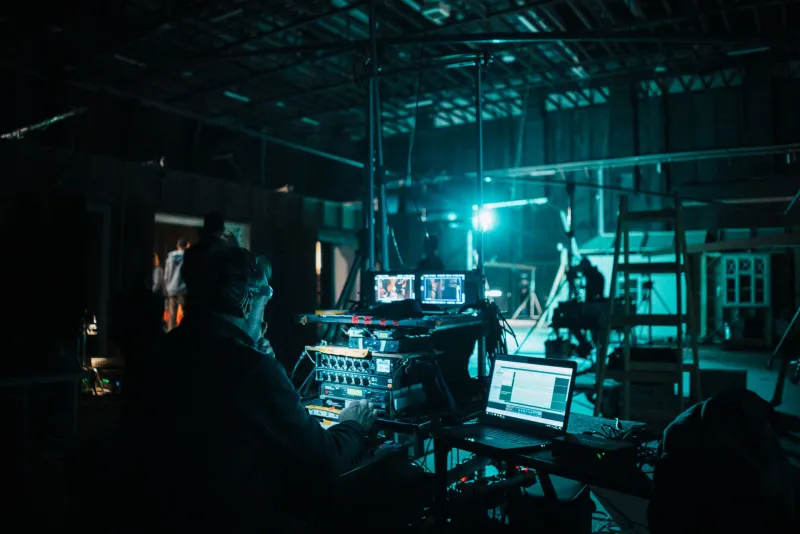
There is a moment that many Atlanta screenwriters describe in nearly identical terms. They are standing somewhere on a soundstage at Trilith or on a street in Castleberry Hill dressed for a period shoot, and a director of photography is explaining to a director why a particular scene — as written — simply cannot be executed the way the page describes it. The light will not cooperate. The lens will not reach. The schedule will not allow it. And in that moment, something shifts in the writer's understanding of what a screenplay actually is.
It is not a blueprint. It is a proposal.
This realization, which might take years to arrive through workshops and script notes alone, tends to land in about forty-five minutes on an active set. That compression of learning is precisely why a growing community of Atlanta screenwriters is deliberately pursuing set access — not as an ego exercise, but as a form of craft education that no classroom can replicate.
The Production Ecosystem That Makes This Possible
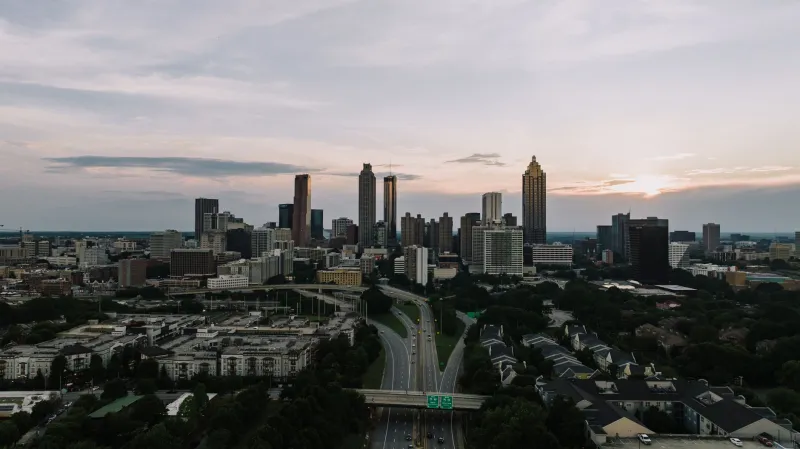
Atlanta's status as one of the most active film and television production hubs in the United States creates a rare opportunity for local writers. With Georgia's entertainment tax incentive continuing to draw major studio productions, streaming originals, and independent features to the region, the sheer volume of active sets within driving distance of the city is extraordinary. On any given week, productions ranging from network television procedurals to prestige streaming dramas may be shooting simultaneously across the metro area.
This density matters. It means that the professional network a screenwriter builds in Atlanta is not a hypothetical bridge to a distant industry — it is a living, working community operating in real time, often within a few miles. Directors, producers, and department heads are not abstractions here. They are people who eat lunch at the same craft services table as the crew member who went to college with someone who attended your last table read.
The access is not automatic, but it is genuinely available to writers who approach it with professionalism and patience.
What Writers Are Actually Learning on Set
The insights that emerge from set observation tend to fall into three broad categories, each of which directly informs the quality and practicality of a screenplay.
Production constraints as creative parameters. Writers who spend time on set begin to internalize the practical logic that governs every production decision. They learn how location choices ripple backward into the script, why a scene set in a two-story interior creates scheduling complications that a single-level space does not, and how the number of speaking extras in a crowd scene multiplies the budget in ways that are not visible on the page. These are not limitations to be mourned — they are creative parameters that, once understood, allow a writer to craft scripts that are genuinely production-friendly without sacrificing dramatic ambition.
Character behavior observed in real environments. Watching actors work through blocking, negotiate with directors about motivation, and physically inhabit spaces that the writer imagined abstractly is a profoundly clarifying experience. Several Atlanta writers have described returning to scripts after set visits and immediately identifying scenes where the action lines were written for a theatrical imagination rather than a camera. The way a character crosses a room, opens a door, or occupies a corner of the frame is information that sets teach in a way that reading about blocking never quite does.
The collaborative grammar of production. Perhaps the most underestimated benefit of set observation is witnessing how a professional production communicates internally. The relationship between a director and a first assistant director, the rhythm of a camera department solving a technical problem, the way a producer navigates a conversation about a schedule change — all of this constitutes a professional language that writers who hope to work in the industry need to understand. Writers who arrive in a room already fluent in that language are perceived differently than those who are not.
Tactical Approaches for Gaining Set Access
The path onto a working set is rarely direct, but it is navigable for writers who treat the process with the same intentionality they bring to their craft.
Start within your existing network. The most reliable entry point is a personal connection to someone already working on a production. This might be a director who workshopped a short film with you, a producer who attended one of Atlanta's many industry mixers, or a crew member who has read your work. A direct, professional request — framed as a learning opportunity rather than a social visit — is almost always better received than a cold inquiry.
Volunteer on independent and student productions. Atlanta's independent film community and the robust film programs at institutions such as Georgia State University and Spelman College generate a steady stream of lower-budget productions that welcome additional hands. Volunteering in a legitimate capacity — whether assisting in the art department, running errands for the production office, or helping with background coordination — places a writer inside the working environment without requiring any special access. The professional relationships formed on these productions have a documented history of opening doors to larger projects.
Engage with Atlanta's industry organizations. Organizations such as the Georgia Production Partnership and various local film commissions periodically facilitate access to productions for educational purposes. Writers who are active, visible members of the professional community are better positioned to benefit from these opportunities when they arise.
Request informational visits through the production office. For writers who have already established some professional credibility — through produced work, contest recognition, or professional representation — a direct, respectful request to a production office for a brief observational visit is not unreasonable. The request should be specific, time-limited, and accompanied by a clear statement of purpose. Productions are busy environments, and a vague request is far easier to decline than a precise one.
The Relationship Dividend
Beyond the craft education, the relational value of set presence deserves direct acknowledgment. The film industry, at every level, operates on trust built through proximity. Directors and producers who have seen a writer conduct themselves professionally in the organized chaos of a working set carry a very different mental image of that writer than they would from a brief pitch meeting or a cold email.
Atlanta's production community is large enough to offer genuine opportunity but concentrated enough that reputations travel. Writers who are known as professionals who understand how production works — who do not disrupt, do not overstay, and do not treat set access as a social occasion — find that this reputation opens subsequent doors with considerably less friction.
A Different Kind of Research
Screenwriting education tends to emphasize the internal work: the development of voice, structure, character, and theme. That work is irreplaceable. But the screenplay exists to be produced, and the writers who understand production from the inside write differently — and often more effectively — than those who do not.
Atlanta's extraordinary production environment offers local screenwriters something that writers in most American cities cannot access with the same ease: a living, breathing laboratory for understanding how stories move from the page to the screen. The writers who are taking full advantage of that resource are not simply learning faster. They are building the professional identities that will define their careers.
The gaff tape and the grip trucks and the quiet urgency of a set about to roll camera — these are not distractions from the writer's work. For the writers paying attention, they are the work.