Written in the Streets: How Atlanta's Location Scouts Are Becoming the Screenwriter's Most Valuable Creative Ally
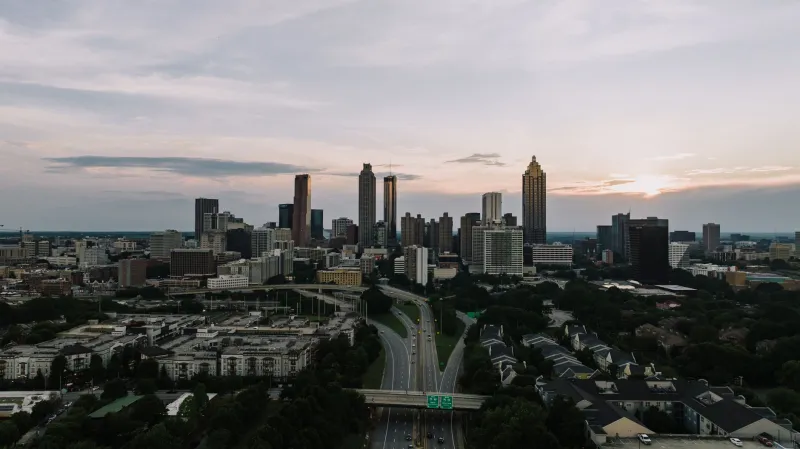
There is a version of Atlanta that exists only on the page—a composite city assembled from memory, assumption, and the occasional Google Maps search. Many scripts set in this city are written there, in that imagined geography, and the seams show. A character drives from Buckhead to East Point in ten minutes. A working-class family occupies a Victorian Craftsman that, in reality, sits in one of the city's most rapidly gentrifying corridors. A climactic rooftop scene unfolds against a skyline that doesn't quite match the neighborhood it's supposed to anchor.
These are not merely technical errors. They are missed opportunities—moments where authentic place could have deepened character, amplified conflict, or made a story feel unmistakably, irresistibly real. The good news is that Atlanta's production ecosystem has quietly developed a resource that can help screenwriters solve this problem before it ever reaches the page: the location professional who operates not just as a scout, but as a creative consultant.
The Shift from Post-Draft to Pre-Draft
Traditionally, location scouting has lived in the production phase. A script arrives, locked or nearly so, and a scout is dispatched to find real-world equivalents for the places the writer imagined. The relationship is reactive. The scout serves the script as written, regardless of whether the script serves the city accurately.
That model is changing in Atlanta. As the city has matured into one of the country's most active production markets, a subset of location professionals has developed deep institutional knowledge of the city's architectural inventory, neighborhood personalities, permitting landscape, and visual grammar. Some are now making themselves available to writers earlier in the development process—and the results, for those who have taken advantage of this access, have been significant.
The conversation is no longer simply, "Can we find this location?" It is becoming, "What does this location make possible that you haven't yet imagined?"
Atlanta's Neighborhoods as Narrative Infrastructure
Consider what a working knowledge of Atlanta's actual geography offers a screenwriter. The city is not a monolith. It is a collection of distinct communities, each carrying its own visual identity, socioeconomic history, and cultural weight—all of which can function as story material.
The Old Fourth Ward, where the BeltLine's Eastside Trail has catalyzed rapid transformation, holds genuine tension between preservation and displacement. Cascade Heights carries a specific cultural legacy tied to Atlanta's Black middle class that is rarely represented with accuracy on screen. The West End contains architecture that spans more than a century, offering a visual layering that production designers describe as unusually rich. Mechanicsville sits in proximity to Mercedes-Benz Stadium in ways that create jarring juxtapositions between scale and intimacy. Clarkston, often called the most ethnically diverse square mile in America, offers a visual and human landscape that most scripts set in Georgia have never attempted to engage.
A screenwriter working from a desk in Midtown, or from across the country, may know that these neighborhoods exist. A location professional who has spent years working within them knows what they feel like at 7 a.m. on a Tuesday, what the light does to a particular block in late afternoon, and which intersections carry the kind of visual specificity that transforms a generic scene into an indelible one.
Producibility as a Creative Virtue
There is a practical dimension to this conversation that deserves direct acknowledgment. Scripts that demonstrate an authentic and workable relationship to their physical settings are more attractive to Atlanta's production community. Producers and line producers who operate in this market can recognize, often within a few pages, whether a writer understands the city they are writing about. A script that reflects genuine geographic intelligence signals that its author has done the work—and that the work will be easier to bring to the screen.
Location-aware writing also tends to be more budget-conscious writing, even if the writer is not consciously thinking about budget. When a scene is grounded in a specific, achievable place rather than an abstract ideal, it tends to be written more efficiently. The writer is not compensating for vagueness with excess. The scene knows where it is, and that knowledge focuses it.
Atlanta's production infrastructure—from the studios anchored around Trilith and the EUE/Screen Gems complex to the independent production companies distributed across the metro area—is built around the city's actual geography. Writers who understand that geography are writing scripts that fit more naturally into the ecosystem that will eventually produce them.
How to Begin the Conversation
Engaging a location professional as a creative resource does not require a formal arrangement or a production budget. Atlanta's film community is, by most accounts, remarkably accessible. Industry events hosted by organizations such as the Georgia Production Partnership and the Atlanta Film Society bring location scouts, production designers, and art department professionals into regular contact with writers and directors at all career stages.
For screenwriters who are serious about grounding their work in the city's actual landscape, a few practical approaches are worth considering. First, treat location research as a story development tool rather than a production task. Walk the neighborhoods your script inhabits. Photograph what you find. Notice what the architecture implies about the people who live within it, and let those implications inform character.
Second, seek out location professionals who have worked extensively in Atlanta and express an interest in the earlier creative conversation. Many are willing to discuss a project informally, particularly when the writer approaches with genuine curiosity rather than a list of demands.
Third, consider the city's production design community as a parallel resource. Art directors and production designers who have built Atlanta's screen geography across dozens of productions carry a visual literacy about the city that is genuinely rare. Their perspective on what the city can look like—and what it can be made to look like—can open creative doors that pure location research leaves closed.
The Story Hidden in the Topography
Atlanta is not a flat city, geographically or culturally. Its terrain rises and falls in ways that have historically shaped where people lived, how they moved, and what they could see from their windows. The city's creek systems, its ridgelines, its highway infrastructure—all of it carries historical weight that a screenwriter who looks closely enough can convert into dramatic material.
The best argument for bringing location intelligence into the writing process early is not efficiency, though efficiency matters. It is the argument for discovery. The city contains stories that are not yet on the page because the writers who might tell them have not yet stood in the places where those stories live. Atlanta's location professionals have stood in those places. They know what is there.
The screenwriters who are willing to ask what they know are the ones who will write the city as it actually is—complicated, layered, and full of narrative possibility that no amount of research from a distance can fully reveal.